AWS Cloud Spend and AWS Budgets allow AWS users to monitor cloud spend after it’s already been deployed. This presents issues for engineering teams that are steeped in AWS CloudFormation — do they optimize after deployment and slow engineering teams down, or simply accept cloud waste?
Now, organizations that rely on CloudFormation can proactively reduce cloud costs before each deployment. Today, we’re announcing support for CloudFormation in Infracost Cloud. That’s been true for our Terraform users, and now it’s true for CloudFormation teams too.
Meeting teams where they are
Enterprise infrastructure is rarely uniform. Teams inherit CloudFormation stacks. Organizations standardize on AWS-native tooling. Platform teams support multiple IaC frameworks across different business units. A single company might run Terraform in one division and CloudFormation in another.
CloudFormation has been one of our most-requested capabilities with over 185 engineers voicing their support on our GitHub repo. We heard them. But we made a deliberate choice to go deep before going wide.
Cost estimation is deceptively complex. Usage-based pricing, regional variations, spot pricing, tiered discounts — getting these right matters. Getting them wrong erodes trust. So we focused on making our Terraform support rock-solid first: accurate estimates, reliable workflows, a great developer UX (including the ability to dismiss and snooze issues from within a PR), policies that actually catch issues, and so much more. Today, thousands of engineering teams use Infracost daily in their Terraform workflows.
That foundation is what makes CloudFormation support possible, having full parity with our Terraform integration from day one.
CloudFormation, meet Infracost Cloud
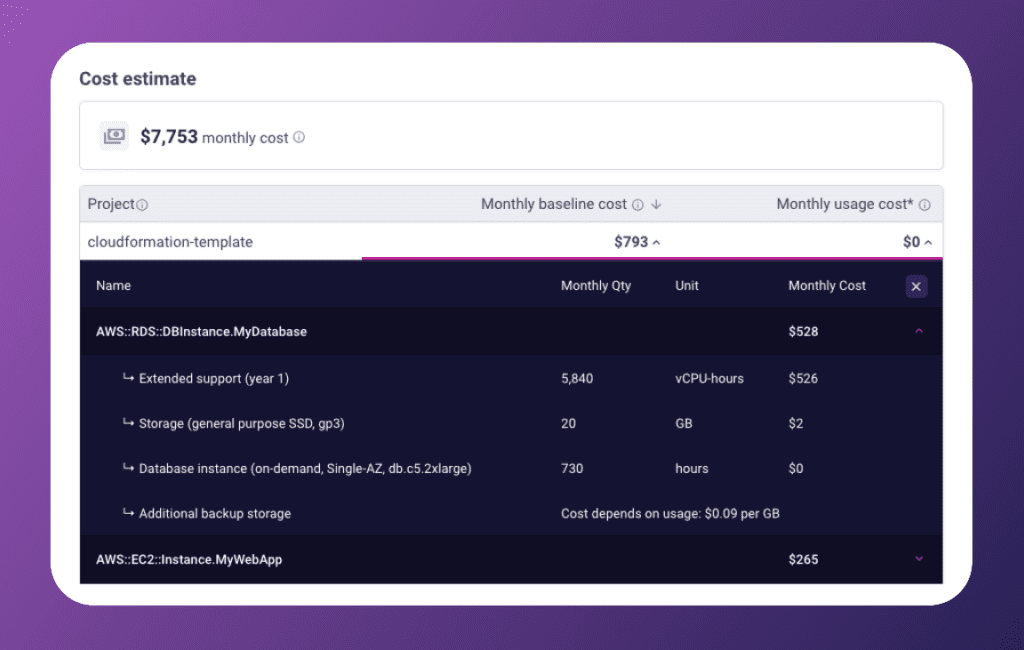
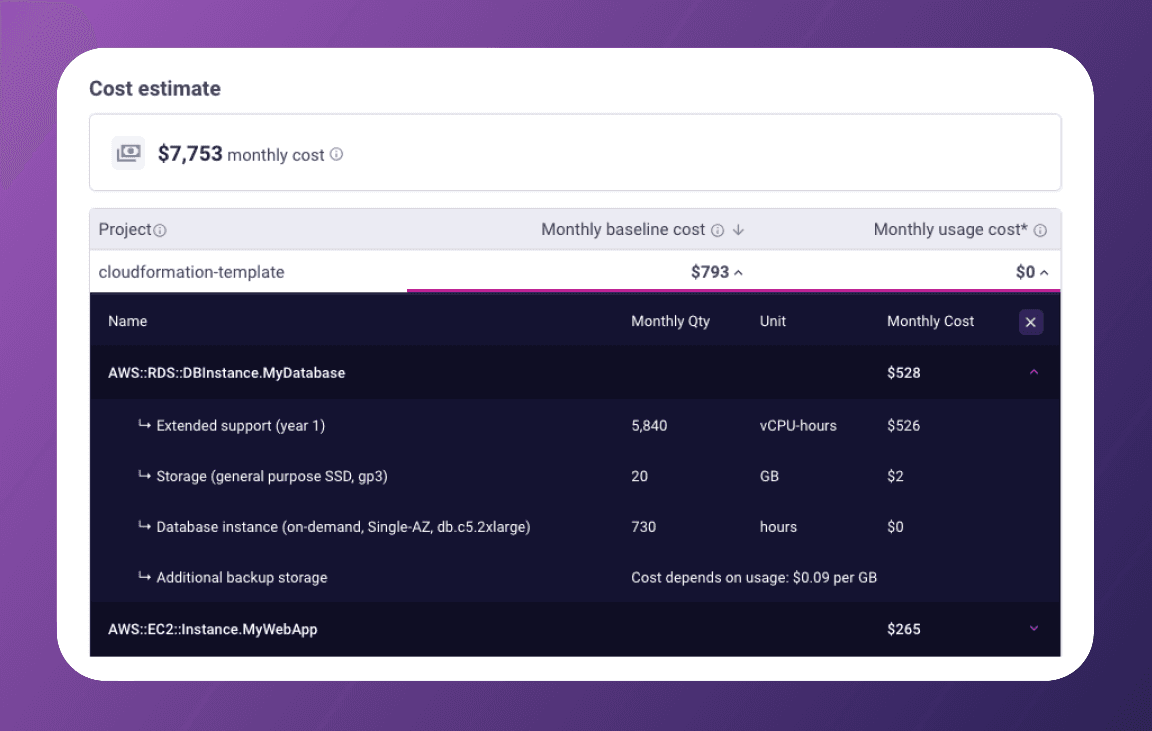
Starting today, Infracost Cloud analyzes CloudFormation templates directly. No deployed stacks required. No change sets. Just point us at your template repos, and we’ll show you what they’ll cost.
We’ve built full parity with our Terraform support. The same resource coverage, the same policies, the same pull request experience. If you’re already using Infracost with Terraform, you know exactly what to expect.
Here’s what this means for your team:
Cost estimates in every pull request. When an engineer modifies a CloudFormation template, they see the cost impact before the code is merged. No surprises. No finger-pointing when bills arrive.
FinOps and Tagging policies that actually get enforced. Your carefully crafted tagging standards? Your instance type guidelines? They now apply to CloudFormation just like they do to Terraform. Policies are checked in the engineering workflow, before anything reaches production.
One dashboard for all your infrastructure. Whether you’re running Terraform in one team and CloudFormation in another, Infracost Cloud gives you unified visibility. Same policies. Same campaigns. Same reporting.
Built with our community
One of our core values is Ustomer, we see ourselves and our users as one. The CloudFormation request on GitHub wasn’t just popular; it was rich with context. Engineers shared their specific use cases, their team structures, their challenges. That input shaped how we approached this… not just whether to build it, but how.
To everyone who contributed to that conversation: this one’s for you.
Get started
Already using Infracost Cloud?
CloudFormation support is available now in early access. Connect your repositories containing CloudFormation templates, and email hello@infracost.io to request early access.
New to Infracost?
Sign up for Infracost Cloud. It’s free to get started. Connect your preferred version control provider (GitHub, GitLab, or Azure Repos), add your CloudFormation repositories, and email hello@infracost.io to request early access and experience shift-left cost visibility for the first time.
What’s next
This launch is Infracost Cloud-first. CLI and IDE support for CloudFormation are on the roadmap for 2026 and we’ll share more as those pieces come together.
In the meantime, we want to hear from you. What’s working? What’s missing? What would make this even more useful for your team?
Join our community Slack and let us know. The best features start as conversations.
Infracost ROI Report
Learn how the ROI of shifting FinOps left is measured